UK bus market leads the way on decarbonisation as HGVs see best year yet
Fri 20 February 2026
View all news
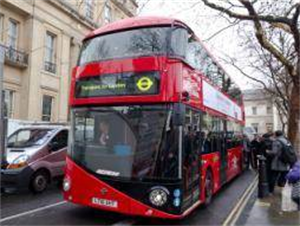
The UK's bus sector continued to be the star performer in terms of decarbonisation of UK road transport in 2025 according to the latest figures from SMMT, while the commercial vehicle sector also showed promising signs of progress. However, the motorcycle sector says progress on electrification is threatened by a 'cliff-edge' as the Plug-in Motorcycle Grant is set to expire in April with no replacement yet proposed.
The first year of the ZEV mandate for cars saw sales targets being met in 2025, albeit with the help of various 'flexibilities', based on past credits from earlier years and sales of PHEVs.
The latest data from SMMT showed that the UK has retained its position as Europe’s leading zero emission bus market by volume. In 2025, zero emission vehicles accounted for over 27% of the 9,259 bus, coach and minibus registrations (a 10.4 percent increase on 2024) against the backdrop of a buoyant overall bus and coach market. The Scottish bus market was particularly strong, growing by over 160%, driven in part by the Scottish Government’s Zero Emission Bus Challenge Fund (ScotZEB).
There was encouraging data from the wider European market too. Transport & Energy report that six out of ten new EU city buses were zero emission (ZE) in 2025, with battery-electric and fuel cell powertrains making up 56% and 4% of new city bus sales respectively. When the Clean Vehicles Directive was first adopted in 2019, electric buses stood at a mere 12% of the market.
2025 may be the year we look back on as when the electrification of the UK’s truck sector really got under way. Supported by the Zero Emission & HGV Infrastructure Demonstrator (ZEHID) programme and other government initiatives, electric truck uptake doubled last year (albeit from a low base) with the 1,000th zero emission truck registered during the year.
Up-front costs remain a big barrier to uptake of eHGVs, but there was encouraging news in early January 2026 as the Government announced an extra £18m for the Plug-in Truck Grant, enabling subsidies of up £120,000 towards the purchase costs of the largest lorries.
Increasingly significant for many truck, bus and coach fleets, of course, is the challenge of getting the required grid connections to service growing fleets of plug-in vehicles in a reasonable period of time. Demands on grid capacity are growing from many quarters and with connection queues already lengthy in many places, fleet managers are well advised to plan and apply for connections well in advance of their planned implementation.
Progress in the L-Category vehicle sector - including mopeds, motorcycles, tricycles and light four-wheeled vehicles - may be under threat, however, according to the trade body, the Motorcycle Industry Association. MCIA warns that the sector faces an imminent policy cliff edge, as the Plug-in Motorcycle Grant (PiMG) is set to expire in April with no replacement currently proposed.
If the scheme ends, MCIA says that L-Category vehicles will become the only road transport segment without any form of government subsidy support and that this risks creating avoidable market disruption. As a result the association is calling for a 12-month extension of the existing grant to provide immediate market stability.
Zemo Partnership has worked closely with MCIA for some years, launching a joint Action Plan for Powered Light Vehicles (PLVs) in February 2022 to decarbonize L-Category vehicles.
Related Links
< Back to news list