Uncertainty over future of ZEV Mandate as Starmer announces resignation
Mon 15 June 2026
View all news
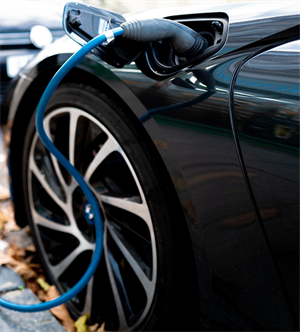
The future of the ZEV Mandate is uncertain following Sir Keir Starmer’s announcement on 22 June that he will step down as Prime Minister. A few days earlier, Downing Street signalled that sales targets were likely to be weakened. Under current rules, 80% of all new cars sold in the UK are mandated to be EVs by 2030.
The Government was expected to announce a consultation on what the new 2030 target should be, following pressure from the motor industry and a trade union to weaken it.
Any announcement now seems likely to be delayed until the installation of a new Government, which is expected to be headed by Andy Burnham the former Mayor of Greater Manchester.
While car makers and the Unite trade union have expressed their concerns to Government about the impact of the targets on costs and jobs. But a range of sustainability and EV industry groups say that any weakening of the target will threaten the UK's long-term electrification and climate goals.
Automotive consultancy New Automotive calculated that the ZEV Mandate has supported £41bn of automotive investment since 2020. In a recent report, 'A-Zev: The Road to Electric', it argues that the policy has played a significant role in attracting private investment into electric vehicle manufacturing, battery production and charging infrastructure by providing long-term regulatory certainty for industry.
It concludes that weakening the ZEV Mandate at a critical stage of market development could slow manufacturing growth, deter investment and erode Britain's competitiveness in what it describes as "a defining industrial race for the future of transport".
Meanwhile, a new report from the EV chargepoint industry trade body. ChargeUK, produced in collabration with LCP Delta has found that EV charging growth will provide the foundation for a £385 billion contribution to the UK economy It also estimates it could establish 35,700 jobs directly and a further 334,000 across the EV sector. However, the report warns that this contribution would be reduced if the ZEV Mandate 'targets are weakened, as a result of uncertainty about future market prospects.
Update: the electrical trade association, BEAMA, says that weakening the ZEV Mandate could cost the UK economy nearly £3bn. The analysis compares the current ZEV Mandate, which targets that 80% of UK vehicle sales will be electric vehicles in 2030, with a weakened mandate, which drops the target to 50%.
Under the best-case scenario, if every foregone EV sale is assumed to be replaced by a hybrid vehicle sale, BEAMA says that Treasury VAT revenues would still be almost £2.9bn lower over the period, because hybrid vehicles generate less VAT per sale than EVs.
Photo courtesy @theblowup on unsplash.com
Related Links
< Back to news list