Transport Committee publishes evidence submitted to inquiry on accelerating the EV transition
Wed 25 February 2026
View all news
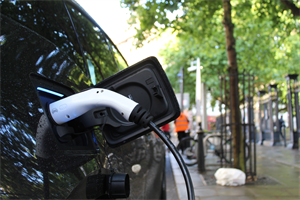
The House of Commons Transport Committee has published evidence submitted in response to its inquiry into how the Government can accelerate the country’s transition to the widespread use of electric vehicles. Zemo Partnership's submission is amongst the evidence published by the Committee on 26th February.
The inquiry "Supercharging the EV transition" was announced following last Autumn's Budget in which proposals for the new Electric Vehicle Excise Duty (eVED) were announced (to start in 2028). It takes place against the backdrop of the ZEV mandate which requires the end of sale of new pure petrol and diesel vans by 2035.
The inquiry is looking at what the impact of the eVED charges might be and how the Government can tackle issues that may be putting the brakes on the EV transition and affecting consumer confidence, including affordability of vehicles and charging. It is examining the rollout and availability of charging infrastructure in different parts of the country.
Zemo's submission acknowledges that Government policy has played a vital role in accelerating electric vehicle adoption in the UK. It notes that policy inconsistency and mixed signals from government — including the withdrawal of purchase incentives and changes to phase-out timelines — have occasionally undermined consumer and industry confidence. It says that stable, predictable policy is essential to meet ZEV mandate targets.
Zemo's submission calls for:
The strengthening of the used EV market, introducing target grants for entry to mid-market used EVs.
The exploration of social leasing schemes offering subsidised lease rates to lower income groups.
The Government’s forthcoming review of public charging costs to assess the market and fiscal implications of applying the lowest VAT rate to EV charging regardless of location.
Accessibility standards to be strengthened, with a clear timetable for mandating PAS 1899.
The use of better, more granular, targeting of charging use-case-based metrics to identify gaps and guide future investment.
The setting out of a clear strategy for addressing gaps in provision of ultra-rapid chargepoints on major routes where private investment is slower, particularly on underserved routes where commercial incentives are weaker.
Stronger regulatory intervention to prioritise transport-related electricity demand by strategic need.
To view the full submission, visit the Transport Committee's website.
Image: Courtesy Unsplash
Related Links
< Back to news list