Energy transition could deliver nearly 10 million additional jobs worldwide - WEF report
Fri 14 November 2025
View all news
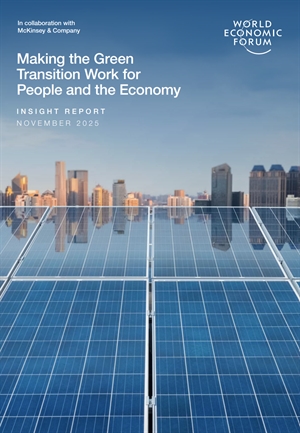
A new report from the World Economic Forum (WEF) suggests that the global green transition could generate 9.6 million net new jobs by 2030, even as millions of existing roles are reshaped or replaced. The analysis, produced alongside McKinsey & Company, highlights both the scale of the economic opportunity and the risks of deepening global inequalities if the shift is not managed inclusively.
Last month, the UK Government published a Clean Energy Jobs Plan which outlined how the transition to a low carbon economy will be underpinned by a rapid expansion of the clean energy workforce, growing from around 440,000 people in 2023 to approximately 860,000 by 2030.
The report estimates that around 14.4 million jobs worldwide will be affected by the energy transition, now well under way. While the net impact is positive, with significant employment growth across clean energy, sustainability services and climate adaptation, the WEF warns that access to finance, uneven regulatory conditions and unequal technological readiness could leave some countries and communities behind. Businesses in lower-income economies are far more likely to cite financial constraints and limited access to green technologies as barriers to transitioning, whereas companies in wealthier nations tend to report regulatory complexity as their primary challenge.
Economic pressures are also shaping corporate perceptions of risk. More than a third of firms around the world say rising energy and commodity costs are hampering their ability to invest in low carbon solutions. Around one in three expect the transition to cause disruptive changes within their workforce. According to the WEF, countries with stronger social protection systems report fewer concerns about job displacement, suggesting that well-designed safety nets can help smooth the transition for workers.
The World Economic Forum sets out a practical framework to help organisations embed social and economic considerations directly into their climate strategies. It argues that companies should tailor their transition plans to local conditions, ensuring that investment decisions support inclusive growth as well as emissions reduction. The report encourages business leaders to evaluate how their plans impact employees, supply chains and surrounding communities, and to ensure that the benefits of the green transition are broadly shared.
Although the WEF report covers a wide range of sectors, energy generation and climate-resilient infrastructure are identified as major engines of future job creation, including roles such as renewable energy engineers, technicians and sustainability specialists. For the transport sector, growth in battery technology, hydrogen production and renewables infrastructure are expected to be a main source of jobs growth.
Related Links
< Back to news list