Average car size continues to grow, adding to crash deaths, limiting space says study
Wed 24 June 2026
View all news
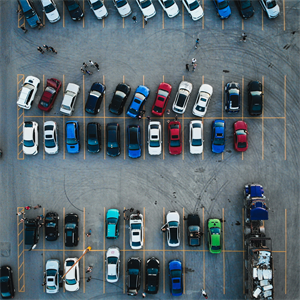
A new report by NGOs T&E and Clean Cities says that the average dimensions of new cars have continued to rise for a long period and that this growth is having negative consequences for road safety, urban parking and space and energy use/efficiency.
The report says that the average length of new cars has been increasing by 1.2cm a year, while height (including bonnet height) and width have also been rising since 2000.
If vehicle size continues to grow to 2040 at current rates, cities will lose 8.5% - 14% of their end-to-end on-street parking spaces. London alone could lose the equivalent of about 100,000 spaces, the study suggests.
The report also finds that the unchecked expansion of car size will also have severe consequences for road safety. Compared to 'right-sizing', the continuation of current trends would see an additional 2,500+ vulnerable road users (pedestrians, cyclists, motorcyclists and moped riders) die on Europe’s roads over the period 2026 to 2040.
Energy use would also increase. If current vehicle size trends continue to 2040, an additional 22.5 TWh of electricity per year will be required - equivalent to around 1,500 onshore wind turbines. Cumulatively, this rises to 116 TWh by 2040 if current trends persist. This added demand would increase household recharging costs by €36 billion across the EU and UK between 2026 and 2040.
Increasing vehicle size is reflected in the type of vehicles being bought in the UK. A decade ago, around one in ten new cars entering UK roads were SUVs, but in 2024, they had achieved a 33 per cent market share and that continues to increase.
Image: thank you to m on Unsplash
Related Links
< Back to news list